
EMT
Emergency Medical Technician Program
Become an EMT
The OCCC EMT Program educates competent health care providers to care for their patients/clients using critical judgment, broadly based knowledge, and competent technical skills at the entry level.
What Does an EMT Career Look Like?
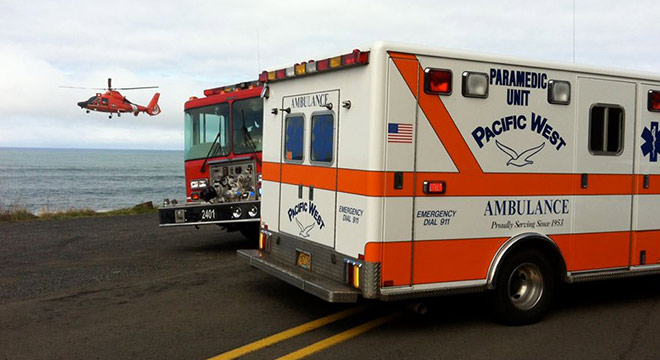 The Emergency Medical Services program offers career training for entry-level positions in emergency medical settings. Ambulance companies, fire departments, police departments, and various other industries requiring emergency medical services may employ EMS Providers.
After successful completion of all requirements for EMT or AEMT training, the student is eligible to apply to take the respective state licensure exams. The Emergency Medical Services (EMS) program trains and educates EMS professionals to excel in meeting the needs of the community. EMS Providers respond to medical emergencies by providing immediate care and transportation to the ill and injured.
This program combines classroom lectures, hands-on skills labs and appropriate cooperative clinical and field experience to provide students with cognitive, psychomotor, and effective competence to function as effective EMS providers.
The Advanced Emergency Medical Technician Program
The Advanced Emergency Medical Technician (AEMT) provides basic and limited advanced emergency medical care and transportation for critical and emergent patients who access the emergency medical system. AEMTs function as part of a comprehensive EMS response, under medical oversight, performing interventions with the basic and advanced equipment typically found on an ambulance. The AEMT is a link from the scene to the emergency health care system. Minimum 20 credits. Students must meet all certificate requirements.
Intended Learning Outcomes
Learning experiences in this program are designed to assist the student in realizing the following outcomes:
- Perform the professional functions of an entry-level Advanced Emergency Medical Technician.
Nursing Course Descriptions
Credits 5
Develops skills for the recognition of symptoms of illness and injuries and proper procedures of emergency care. Requires passing criminal background check and drug screen before placement into mandatory clinical observation in hospital emergency department and ambulance ride-along experience. Part 1 of the 2-part Oregon EMT course.
Credits 5
Credits 5
Credits 5
Develops skills for recognizing symptoms of illness and injuries. Covers proper procedures of emergency care at the Advanced EMT level. Continuation of AEMT Part I. Requires passing criminal background check and drug screen before placement into mandatory clinical and internship experience. Part 2 of the 2-part Advanced EMT course sequence.
- How long is the OCCC nursing program?
- The program is designed to be completed in two years. However, many prerequisites must be completed before admission. These prerequisites include a number of general education courses required for the Associate of Applied Science in Nursing. The program is very competitive and completing most of the general education courses before applying will assist the candidate in this process.
- If I have all the general education classes completed, can I complete the program more quickly?
- The six quarters of nursing courses cannot be combined. The nursing courses at each level must be completed with a grade of “C” or higher before a student can take the nursing course at the next level. Each course is only offered once per year
- Is there a time limit on math and science courses?
- No – we do not impose time limits on the math or science courses. We believe that this practice reduces barriers that may exist regarding applying for the nursing program.
- What degree will I earn upon completion of the AAs Program?
- Associate of Applied Science Degree in Nursing (ADN).
- Can I become a LPN after the first year?
- Yes, you may choose to apply to the Oregon State Board of Nursing (OSBN) to take the National Council Licensure Examination-Practical Nurse (NCLEX-PN) after successfully completing the first year of our program.
- Will I be a RN when I graduate?
- No, graduation from our program entitles you to apply to the Oregon State Board of Nursing to take the NCLEX-RN (National Council Licensure Examination-Registered Nurse), which is a standardized exam that the Oregon State Board of Nursing (OSBN) uses to determine whether or not a candidate is prepared for entry-level nursing practice. When a graduate nursing student passes the NCLEX-RN, OSBN will issue a license to practice as a registered nurse, as long as you have met all the other requirements.
- What’s the difference in course work between a two-year and a four-year RN program?
- In a four-year (Bachelor of Science, or BS) degree program, there are more credits required for graduation. These are usually split between liberal arts and sciences and the nursing curriculum itself. Because of the longer time frame and the higher credit requirements, students in these programs pursue subjects (both nursing and non-nursing) with greater depth and breadth than in two-year (Associate Degree, or ADN) programs. BS programs also include more information about community (public health) nursing, nursing research, and health care management than ADN programs.
- Can I still get into the Nursing Program if I have a Criminal Record?
- Certain criminal violations will prevent you from becoming a licensed nurse in the State of Oregon. For a list of violations or more information contact the Oregon State Board of Nursing at 971-673-0685. You may also review this website.
- What jobs can I get when I graduate?
- New graduates from ADN programs are hired by hospitals, nursing homes, physicians’ offices, and many other agencies throughout Oregon. Some specialty areas of a hospital, such as Intensive Care or the Emergency Department, may require more general experience first but also do hire new graduate RNs.
- Do I need extra training to specialize?
- You will receive specialized on-the-job training in most types of jobs. However, advanced practice roles such as nurse anesthetist, nurse educator, nurse practitioner, and nurse midwife require more years of education and additional nursing degrees.
- What are starting salaries for graduates of the nursing program?
- That depends on where you go to work, since nurses’ salaries vary by region and also by type of employer. Most full-time and even many part-time positions include very favorable benefits packages.
- Where in Lincoln County will the nursing program classes be offered?
- The theory portion of nursing classes are offered at our Newport and Lincoln City campuses. Clinical experiences are primarily held in Lincoln County, however there may be situations in which you would need to travel out of county.
- What clinical sites are used?
- We have many clinical partners throughout Lincoln County. Our clinical sites include both Samaritan Pacific Communities Hospital and Samaritan North Lincoln Hospital, Avamere Rehabilitation and Specialty Services, Confederated Tribes of Siletz Community Health Center, Lincoln County Public Health Department, Lincoln County Correctional Facility, Good Samaritan Regional Medical Center, Samaritan Evergreen Hospice Signature Home Health & Hospice, and various private ambulatory care settings. We will also be utilizing high-fidelity simulation labs at the OCCC Campus for augmentation of clinical experience.
- Can I choose my clinical sites?
- No, clinical sites are assigned by faculty throughout the program based on the learning needs of students and clinical availability. All students must be prepared to provide their own transportation to any clinical site during any given quarter of study. During the final quarter of the nursing program, students will be doing a senior Capstone experience with an RN. This experience is a total of 165 hours. Students will complete a survey indicating their preferences for their Capstone placement and consideration is given to the students’ choices whenever possible with no guarantees.
- Is the Nursing Program considered a full-time program?
- Yes, the nursing course/work load is considered full-time and most terms are 12-13 credits. The final term of the Nursing Program is 10 credits and it will affect your financial aide as you need at least 12 credits to be considered full-time with Federal Financial Aide.
- How many hours can I work and still do well in the Nursing Program?
- That varies based on the student’s academic ability and time for study. We recommend that you study two to three hours a week for every credit hour for which you are enrolled. Most students are able to be successful in the program only if working less than half-time while in the nursing program. Full-time work is possible and perhaps desirable during the summer between the first and second year of the program.
- What is the first step in applying to the Nursing Program?
- Read through the entire application and all available information on the OCCC website. It will provide all the necessary forms and information on the due dates. It is also important that you meet with the Student Success Coach assigned to Nursing & Allied Health. You can find contact information for the Student Success Coaches here.
- How many students apply to the Nursing Program?
- It will vary from year to year. There are always more applicants than spaces available. We typically receive between 60-100 qualified applicants per year.
- How many students are accepted to the Nursing Program?
- We typically accept between 40-50 beginning students each spring into the ADN program for the following September. The number of LPN-RN students accepted vry greatly based on a variety of factors.
- Do I need to be a Nursing Assistant (NA) to apply for the nursing program?
- No, but experience in the health care field is invaluable in understanding the role of the nurse.
- I started a nursing program at another college. Can I enter your program mid-stream?
- It depends on availability of space, the transferability of the courses you have already completed and other factors. Please reach out to Pierce Moon, the Dean of Nursing & Allied Health to discuss a potential transfer.
- Are there scholarships available for nursing students?
- Yes! Please contact your assigned Student Success Coach for more information. You may also view available scholarships here.
- If I am not accepted, can I reapply?
- Yes, you may. It would be helpful to check with the nursing department or your Student Success Coach to learn how to improve your chances for acceptance the following year. You will need to fill out a new application each year you apply.
- How do I contact the Nursing Program if I have more questions?
- Contact the Nursing & Allied Health Department at NursingandAlliedHealth@oregoncoast.edu
- Contact the Dean of Nursing & Allied Health
How Do You Get Started?
Paying for School — You Have Options
Cost should never be the reason you don’t pursue a an EMT certificate. Your Student Success Coach can tell you about OCCC’s Financial Aid options. Schedule your meeting, below!
Your Next Steps
Your career is waiting. Let’s not waste a moment!
Ready to start? Here’s what to do today:
Schedule an in-person or Zoom advising appointment with a Student Success Coach.
Apply for admission and register for classes
Additional Information
Disabilities
Oregon Coast Community College is committed to providing equal opportunities for students with disabilities throughout the College community. Students with documented disabilities are entitled to reasonable accommodations under Section 504 of the Rehabilitation Act of 1973 and the Americans with Disabilities Act of 1990. Our philosophy is to maximize your independence and self-reliance, providing a variety of support options to assist you in achieving your educational and/or vocational objectives. To receive services, you must submit documentation of your disabling condition(s) to the Vice President for Student Affairs. To initiate support services, please contact the Vice President for Student Affairs at 541-867-8511. Students are responsible for requesting, in a timely manner, accommodation and documenting the nature and extent of their disability.
Equal Opportunity and Non-Discrimination
The College prohibits unlawful discrimination based on race, color, religion, national origin, sex, marital status, disability, veteran status, age, sexual orientation, or any other status protected by federal, state, or local law in any area, activity or operation of the College. The College also prohibits retaliation against an individual for engaging in activity protected under this policy, and interfering with rights or privileges granted under anti-discrimination laws. In addition, the College complies with applicable provisions of the Civil Rights Act of 1964 (as amended), related Executive Orders 11246 and 11375, Title IX of the Education Amendments Act of 1972, Section 504 of the Rehabilitation Act of 1973, Americans with Disabilities Act of 1990 (as amended), Uniformed Services Employment and Reemployment Rights Act (“USERRA’), and all local and state civil rights laws. Under this policy, equal opportunity for employment, admission, and participation in the College’s programs, services, and activities will be extended to all persons, and the College will promote equal opportunity and treatment through application of this policy and other College efforts designed for that purpose.
Persons having questions about equal opportunity and nondiscrimination should contact either:
Vice President for Academic and Student Affairs, Kristina Holton
or
Director of Human Resources, Joy Gutknecht
Questions can also be mailed to their attention at 400 SE College Way, Newport, OR 97366.