Aquarium Science Program
Study Aquarium Science on the Oregon Coast
 Have you ever wondered what it takes to care for the incredible marine life you see at world-class aquariums? Aquarium Science prepares students for rewarding careers in aquatic animal husbandry, life support system design, exhibit design, and research husbandry — the skilled professionals who keep aquatic animals healthy, thriving, and visible to the public.
This discipline is about more than just loving marine life. It is a hands-on technical field that blends biology, chemistry, engineering, and animal behavior. Aquarium Science students learn aquatic animal husbandry — the science and practice of caring for aquatic animals under human care. You will master everything from water chemistry/quality management and life support systems to animal nutrition, health monitoring, and exhibit design.
Graduates of the program enjoy a 94% job placement rate within the first year after graduation, finding careers at public aquariums, marine research facilities, fish hatcheries, aquaculture operations, and conservation organizations worldwide. If you are ready to turn your passion for aquatic life into a meaningful career—one where you make a real difference in animal welfare, conservation, and public education — Aquarium Science might be your calling.
What Makes This Program Different
An unreal (and, yet, very real) placement success rate
94% of graduates report working in the aquatic animal industry within one year!
At a Glance
- Purpose-built 10,000 sq ft Teaching Aquarium in Newport, Oregon
- 20–24 students accepted per year across all pathways
- 94% of graduates working in the aquatic animal industry within one year
- Practicums at Oregon Coast Aquarium, Hatfield Marine Science Center, and regional hatcheries
- Nationally reviewed annually by senior aquarium science professionals (National Visiting Committee)
- Pathways for high school graduates, life science degree holders, and career changers
What Students Experience in the Aquarium Science Program
The program blends rigorous science coursework with specialized technical training. Students build a strong foundation in biology, chemistry, and mathematics while simultaneously diving into aquarium-specific disciplines. Coursework covers water chemistry in aquatic systems, including lab safety, the nitrogen cycle, salinity, dissolved oxygen, acid/base chemistry, pH buffering, ozone chemistry, coliform bacteria testing, and proper handling of spectrophotometers and other lab techniques.
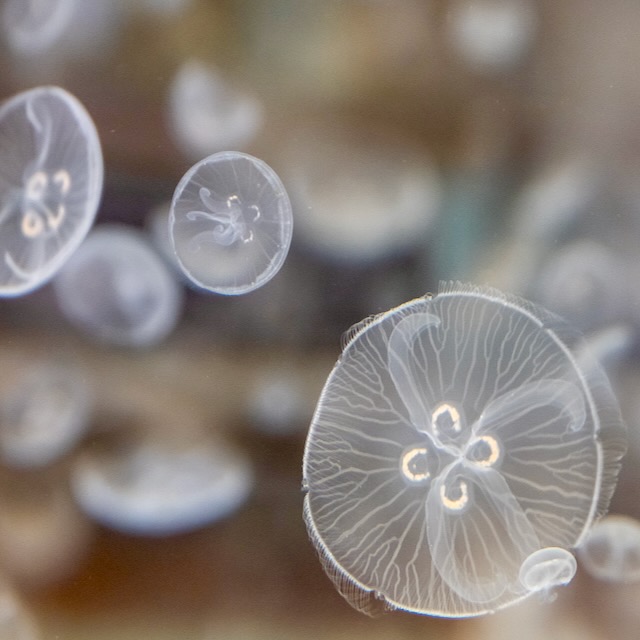
Beyond water chemistry, students explore the biology and behavior of diverse aquatic species—from freshwater and marine fishes to invertebrates like corals and jellyfish, and even specialized coursework on elasmobranchs (sharks and rays). The curriculum examines reproductive strategies of fishes and invertebrates in controlled environments, nutritional requirements throughout their life history, and industry standards for food handling. Students also learn about life support system design, construction, maintenance and troubleshooting for semi-closed, closed and open systems, along with exhibit design and how to communicate science to public audiences.
Your Pathway to Aquarium Science
The Aquarium Science Program offers multiple pathways into the aquatic animal industry — whether you are coming straight out of high school, already hold a life science degree, or are returning to school after time in the workforce. Every pathway leads to the same outcome: a qualification recognized by public aquariums, zoos, fish hatcheries, aquaculture facilities, marine research programs, and ornamental fish businesses across the country.
Certificate in Aquarium Science
1-Year Program
- For career changers and recent college graduates who already hold a Bachelor’s degree or higher in a life science field: Biology, marine science, environmental science, chemistry, zoology, or related discipline required
- 53 credit hours of specialized aquarium science courses and daily training in the Teaching Aquarium
- Join a cohort of AAS and Bachelor’s students — same hands-on training, accelerated timeline
Associate of Applied Science (AAS)
2-Year Degree (1+1)
- 90 credit degree program for students who do not hold a bachelor’s degree or higher in a life science field
- General education course work in year 1 and then rigorous aquarium science coursework alongside Bachelor and Certificate students
- Possibility to transfer to Western Oregon University (Monmouth) to complete a Bachelor in Aquarium Science
Bachelor of Science & Certificate in Aquarium Science
4-Year Degree (1+2+1)
A brand-new, cost effective pathway that starts right here in Newport:
- Year 1 at OCCC: complete general education coursework on the Oregon Coast
- Years 2-3 at Western Oregon University (Monmouth): Life and Social Sciences, and Business
- Year 4 at OCCC: 53 credit hours of specialized aquarium science courses and Teaching Aquarium training
- Graduates earn a Bachelor of Science in Aquarium Science from WOU and a certificate from OCCC
Bachelor of Science & Certificate in Aquarium Science
4-Year Degree (3+1)
For students seeking a broad academic foundation:
- Years 1–3 at Western Oregon University (Monmouth): Biology, Chemistry, Earth Science, Business, Financial Accounting, and Marketing
- Year 4 at OCCC: 53 credit hours of specialized aquarium science courses alongside Teaching Aquarium training
- Graduates earn a Bachelor of Science in Aquarium Science from WOU and a certificate from OCCC
Teaching Aquarium & Facilities
Teaching Aquarium & Facilities
Most marine biology programs teach you the science. Our program teaches you what to do with it — maintaining life support systems, caring for live animals, and building the hands-on skills that turn a science degree into a career working with aquatic animals every day.
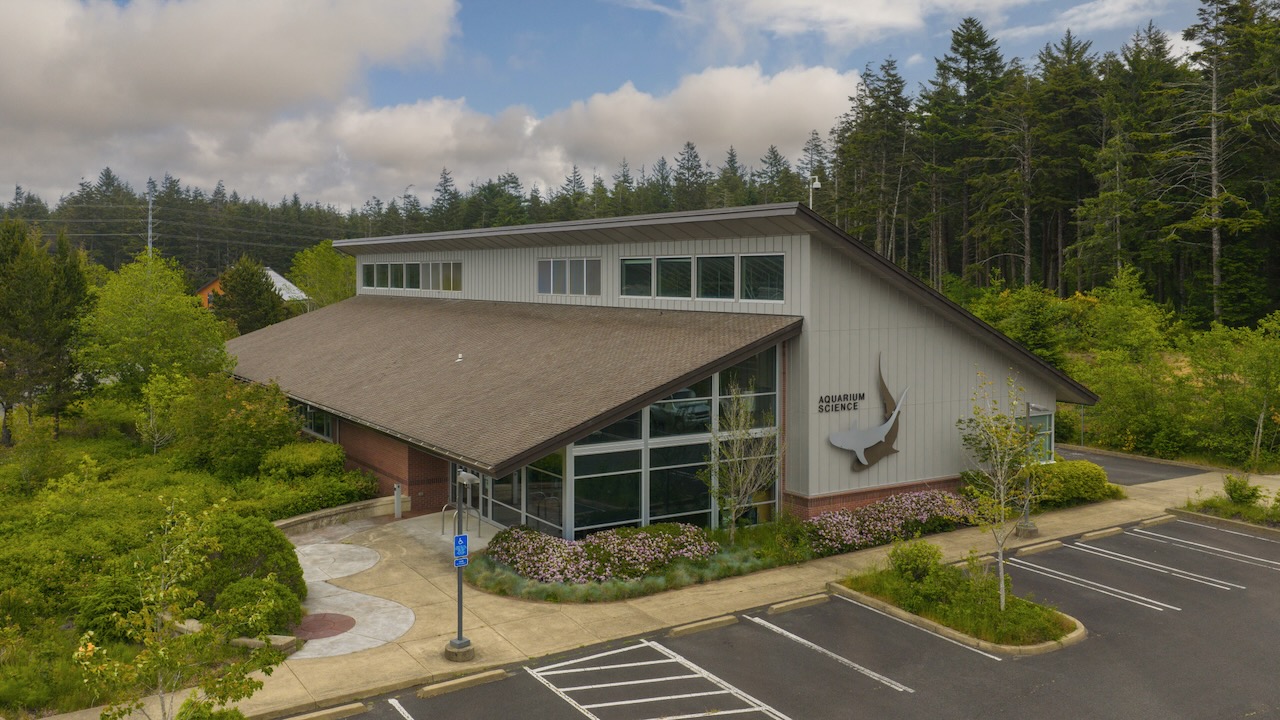
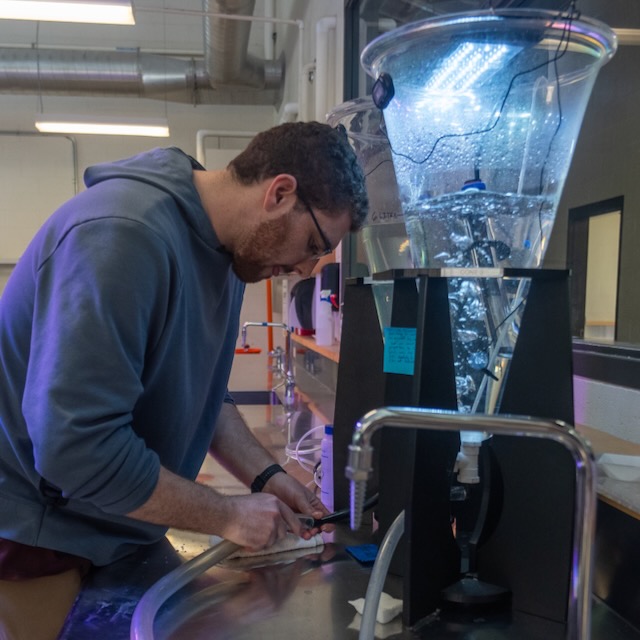
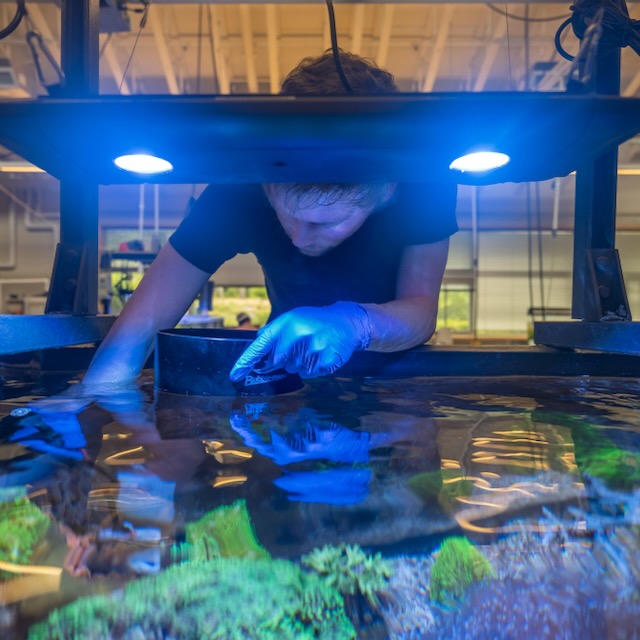
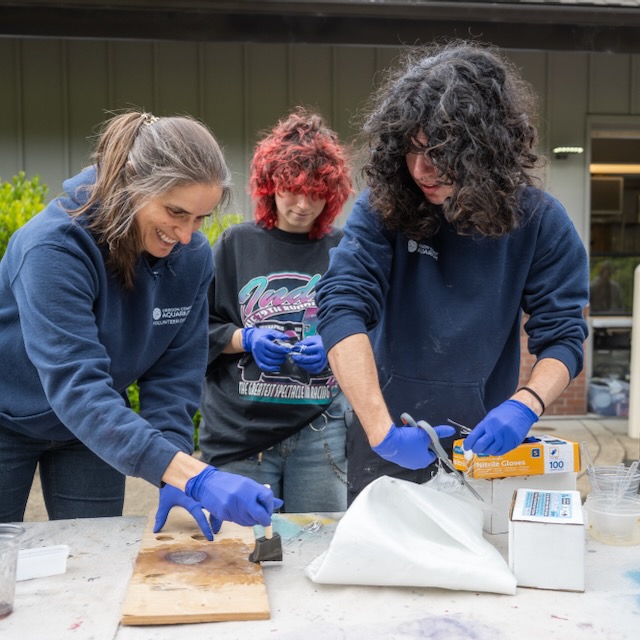
Our teaching Aquarium is specifically designed as a teaching tool that exemplify industry best practices. You will get your hands wet daily, working alongside professional aquarists as you learn the science, skills, and craft of this specialized profession.
- 10,000 sq ft purpose-built training facility — not a display aquarium, a professional working environment
- 16+ life support systems designed specifically as teaching tools
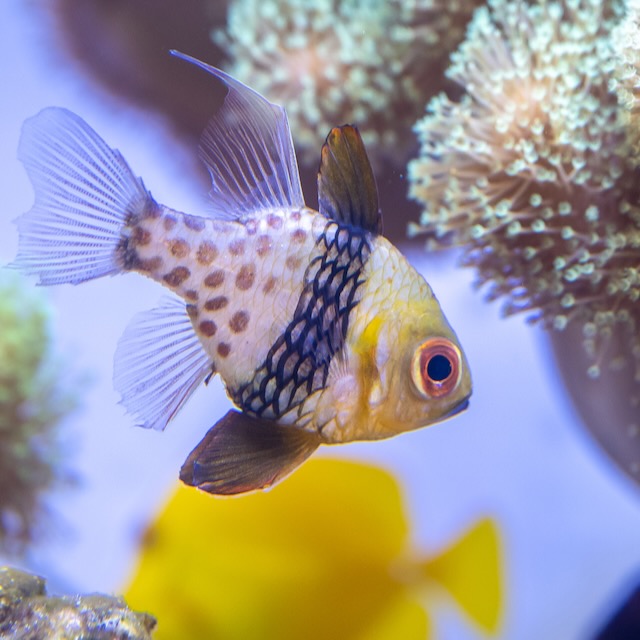
- Systems include: tropical reef tanks with live corals, temperate shark tank, jellyfish systems, and cold-water Pacific species exhibits
- Equipment: bioreactors, protein skimmers, UV sterilizers, sand filters, and more
- Dedicated water quality and animal health lab for disease diagnostics
- Food preparation areas built to professional public aquarium back-of-house standards
- Student workshop, live culture lab, and animal holding lab
Partner Facilities, Practicums & Internships
Partner Facilities, Practicums & Internships
Practicums
Aquatic animal husbandry practicums are a required, structured part of the curriculum — scheduled during the program year with set weekly hours. Some take place in-house at the Teaching Aquarium; others at partner facilities where professional staff serve as mentors.
- Oregon Coast Aquarium — work with fish, invertebrates, marine mammals, and seabirds alongside professional aquarists and life support specialists
- Hatfield Marine Science Center (OSU) — bivalve aquaculture, larval fish rearing, research husbandry, and fisheries science
- Commercial aquaculture operations — experimental- and production-scale shellfish and finfish facilities on the Oregon Coast
Internship
- 360-hour field internship completed in Term 4 (8-week summer term)
- Students arrange their own placement — open anywhere in the world
- Past students have interned at public aquariums, research institutions, aquaculture facilities, and hatcheries across the US and internationally
- Many students complete the internship while employed in their first professional role in the aquatic animal industry
- 94% placement rate reflects how seamlessly this transition happens
Your Aquarium Science Plan
Your Aquarium Science Plan
All students — AAS, Certificate, and Bachelor’s — complete the same core aquarium science curriculum together in their final year at OCCC. 53 credit hours across four terms, including 132 hours of practicum and 360 hours of internship. The year of aquarium science courses requires full-time enrollment over 4 terms. The final term is a 360-hour field internship completed anywhere in the world — and for many students, the first few weeks of their first professional job in the aquatic animal industry is all it takes to fulfill the requirement. By the time you graduate, you are not just ready for the industry — you may already be working in it.
View the term-by-term course schedules and other details.
View the Aquarium Science Program student handbook.
All courses require a grade of C or better. Elective options include open water scuba diving certification and AED/CPR/First Aid training — both are meaningful advantages when competing for jobs in the aquatic animal industry.
How to Apply
How to Apply
Apply in January of the calendar year your final year begins: Winter term of AAS year 1, winter term of year 3 at WOU, or winter term of your final bachelor’s year for certificate students. The application window opens every January for classes beginning that fall. Only 20–24 students are accepted per year across all pathways. Start preparing early.
Selection Criteria
- GPA and completed coursework
- Animal care work or volunteer experience
- Written experiential assessment essay
- Contact information of two professional or academic references
- Zoom interview with AQS leadership, faculty, and staff
Application Steps
- Apply to OCCC at oregoncoast.edu/apply (skip if already enrolled)
- Complete the AQS Program application
- Submit transcripts, essay, resume, and contact information for 2 references
- You will get notified to schedule an interview once we prescreen your application
Not ready to apply yet? Contact us to be notified when the next application window opens or contact a Success Coach at oregoncoast.edu/advising to begin preparatory coursework.
Questions? Contact us at aquarium.science@oregoncoast.edu
Your Next Steps
Your career is waiting. Let’s not waste a moment!
Ready to start? Here’s what to do today:
Schedule an in-person or Zoom advising appointment with a Student Success Coach.
Apply for admission and register for Fall term
Additional Information
Disabilities
Oregon Coast Community College is committed to providing equal opportunities for students with disabilities throughout the College community. Students with documented disabilities are entitled to reasonable accommodations under Section 504 of the Rehabilitation Act of 1973 and the Americans with Disabilities Act of 1990. Our philosophy is to maximize your independence and self-reliance, providing a variety of support options to assist you in achieving your educational and/or vocational objectives. To receive services, you must submit documentation of your disabling condition(s) to the Vice President for Student Affairs. To initiate support services, please contact the Vice President for Student Affairs at 541-867-8511. Students are responsible for requesting, in a timely manner, accommodation and documenting the nature and extent of their disability.
Equal Opportunity and Non-Discrimination
The College prohibits unlawful discrimination based on race, color, religion, national origin, sex, marital status, disability, veteran status, age, sexual orientation, or any other status protected by federal, state, or local law in any area, activity or operation of the College. The College also prohibits retaliation against an individual for engaging in activity protected under this policy, and interfering with rights or privileges granted under anti-discrimination laws. In addition, the College complies with applicable provisions of the Civil Rights Act of 1964 (as amended), related Executive Orders 11246 and 11375, Title IX of the Education Amendments Act of 1972, Section 504 of the Rehabilitation Act of 1973, Americans with Disabilities Act of 1990 (as amended), Uniformed Services Employment and Reemployment Rights Act (“USERRA’), and all local and state civil rights laws. Under this policy, equal opportunity for employment, admission, and participation in the College’s programs, services, and activities will be extended to all persons, and the College will promote equal opportunity and treatment through application of this policy and other College efforts designed for that purpose.
Persons having questions about equal opportunity and nondiscrimination should contact either:
Vice President for Academic and Student Affairs, Kristina Holton
or
Director of Human Resources, Joy Gutknecht
Questions can also be mailed to their attention at 400 SE College Way, Newport, OR 97366.